
Category: Community Health Workers

  • Sharing Our CHW Integration Pilot Learning at the Western Forum

    Sharing Our CHW Integration Pilot Learning at the Western Forum

    Integrating community health workers (CHWs) into clinics has proven to be a win for communities, but it also comes with challenges. Sarah Salomon (assistant director of applied research), Andrew Taylor (MPA candidate, University of Washington), and representatives of four of the six clinics participating in the Pilot facilitated an interactive session at the Northwest Regional Primary Care Association’s 2018 Western Forum for Migrant & Community Health Conference.

    The interactive presentation highlighted the lessons learned to date from Healthy Gen’s CHW Integration Pilot program, an initiative beginning in 2016 in partnership with the Washington State Department of Health. The program aims at integrating one CHW into each primary care clinic to address chronic disease prevention and management. In particular, the program maintains an emphasis on diabetes, hypertension, and screening for breast, cervical, and colon cancer.

    A few key lessons learned from the program so far include:

    • CHWs are successful with patients that clinics have struggled to support. Pilot sites report measurable increases in patient engagement in services and improved health outcomes.
    • Defining the CHW’s role and responsibilities is a challenge. Setting the scope of work so other clinic staff understand that role—and function as a team—yet preserve flexibility for CHWs to meet client and community needs is a true balancing act.
    • Ongoing communication is critical to success. Supervisors play an important role in helping other clinic staff understand the role of CHWs and integrating them into care teams. Supervising is a big job, and supervisors need dedicated time, training and support, too.

    The pilot program is located in six clinics across five Accountable Communities of Health regions. Clinics include CHAS Health in Spokane, Community Health Care Eastside Tanbara Clinic in Tacoma, Family Health Centers in Okanogan, Free Clinic of Southwest Washington in Vancouver, Port Gamble S’Klallam Health Clinic, and Sea Mar Community Health Centers in Vancouver.

    Each clinic has a unique community focus. For example, Sea Mar is addressing uncontrolled diabetes among a caseload of Spanish-speaking patients, while CHAS Health’s primary focus has been increasing access to free clinic services within the uninsured Marshallese community in Spokane.

    CHWs in the pilot program are central to Healthy Gen’s work in creating equitable health outcomes and enduring health equity because they serve as important bridges between community members and health clinics. For many reasons, including language, cultural, and economic barriers, clinics may not offer services in ways that adequately meet the needs of some communities they aim to serve. For example, community members may not know how or where to access services, may not feel comfortable going to a clinic, or may not get their needs met when they do go. By initiating care through a CHW—a trusted member of the community—that individual may then receive the medical attention they need at the clinic in a way that is inclusive and comfortable for them. Additionally, by including CHWs as members of clinical care teams, other providers learn how to better meet the needs of individual patients and communities.

    As a state leader in the CHW field, Healthy Gen’s approach to community based health programs encompasses both targeted efforts—like CHWs in clinics helping with chronic disease prevention and management—as well as broader initiatives—like contributing to the implementation of the Pathways Community Hub model across Accountable Communities of Health as a way for CHWs to improve the health of their communities care coordination via care coordination and data collection—to drive health equity throughout Washington.

    Learn more about the CHW Integration Pilot program.

  • Legislative Session Wraps Up With Wins for Community Health and Health Equity

    Legislative Session Wraps Up With Wins for Community Health and Health Equity

    The legislature adjourned on March 8, and it was the first legislative session since 2014 that adjourned on time and without additional special sessions to complete their work. During the 60 day session, 1,410 bills were introduced, 317 made it through the legislative process, and Healthy Gen’s policy and advocacy work continued to strengthen community health worker (CHW) initiatives and health equity throughout Washington.

    Healthy Gen is excited that Representative June Robinson’s efforts around CHWs this session resulted in $150,000 in funding being secured in the final supplemental operating budget for the Washington State Department of Health to implement education and training recommendations made by the 2016 Community Health Worker Taskforce which will strengthen the work of CHWs in the state.

    Another win for health equity comes from Governor Inslee signing 2ESHB 1508, “Breakfast After the Bell,” a bill that requires high-needs schools with 70 percent or more of its students who qualify for free and reduced meals to offer breakfast after the school day begins. The law also requires an analysis to see if offering breakfast has an effect on absenteeism, performance on standardized tests and graduation rates. The bill passed both chambers this session with strong bipartisan votes.

    For the fourth year, many Prevention Alliance members, advocates, and youth from around Washington worked to advance HB 1054 and SB 6048, also known as “Tobacco 21,” a measure intended to raise the tobacco and vape product purchase age to 21. HB 1054 passed the House with a vote of 63-35 and confirmed the power of Healthy Gen’s youth advocacy training—a program created in partnership with statewide community coalitions and the Washington Association for Substance Abuse and Violence Prevention—as two legislators acknowledged the role youth advocates had in their decisions to vote for the bill. Upon passage in the House, the bill was transmitted to the Senate where it did not pass.

  • Healthy Gen Deepens Community-Based Health Programs in Partnership with Pierce County ACH

    Healthy Gen Deepens Community-Based Health Programs in Partnership with Pierce County ACH

    Healthy Gen is proud to announce a deepening of our long-standing partnership with Pierce County Accountable Community of Health (Pierce County ACH) through a shared relationship with Dr. Kathy Burgoyne.

    Beginning March 19, Dr. Burgoyne, Healthy Gen’s senior director of applied research, will also serve as Pierce County ACH’s senior advisor for community engagement and linkages.

    For more than 10 years, Healthy Gen has worked in Pierce County to develop and support the community health worker (CHW) networks and instill community engagement in policy and system reforms. Healthy Gen and Pierce County ACH will continue to collaborate with and learn from each other, with Pierce County ACH carrying out deep regional work and Healthy Gen enacting statewide efforts.

    At Pierce County ACH, Dr. Burgoyne will work with staff and key partners to integrate health into Pierce County’s housing, social services, education, employment, public safety and economic development areas. She will work closely with Pierce County ACH team members who are responsible for community engagement, community-based care coordination, community-based policy and system changes, workforce development and partnership development to create cross-sector partnerships and initiatives to spearhead innovative and effective approaches to promoting health and health equity.

    At Healthy Gen, Dr. Burgoyne will continue to support the development and implementation of Pathways community-based care coordination system and work to strengthen the CHW workforce. By working closely with Healthy Gen staff, the six Accountable Communities of Health that have adopted the Pathways model, Care Coordination Systems and the Pathways Community HUB Institute, her work will ensure the successful implementation of Pathways Community HUBs across the state of Washington.

    In addition, Dr. Burgoyne will remain closely tied with Healthy Gen staff and key partners to ensure support for the unique role of community health workers, as the organization continues its mission of transforming systems, policies, and practices to create equitable health outcomes and enduring health equity.

  • Healthy Gen Kicks Off Pathways with Training Series

    Healthy Gen Kicks Off Pathways with Training Series

    Healthy Gen is excited to kick off Pathways, a community-based care coordination approach that reduces health and social disparities in communities by connecting those most at risk for poor health to information and services that can reduce these risks and track the associated outcomes.

    In March, a series of three Pathways trainings for community-based care coordinators will begin and extend over the next seven months. Approximately 50 community health workers (CHWs) and their supervisors will be trained to fill jobs created via Pathways.  These training will also support two Healthy Gen staff members to become certified as Pathways master trainers who will support the training of others.

    The Pathways model centers on regional HUBs which act as the infrastructure for care coordination and referrals, connecting community members to the right services at the right time. Crucial to the effectiveness of the Pathways model are the care coordinators themselves, many of whom are CHWs, who connect their fellow community members to the services they need.

    While many communities have the necessary health services, the work is fragmented with limited communication or coordination between service providers. Pathways works by using existing community resources efficiently and effectively, focusing on common metrics to identify and track risks while providing holistic community care coordination with one care coordinator per individual/family and providing a platform by which outcomes are measured and paid for.

    The model was chosen by the Health Care Authority (HCA) for Accountable Communities of Health (ACH) who take on this project, and backing from the participating ACHs ensures a quick, and effective launch of the Pathways HUBs.

    For more information, view these resources from Pierce County ACH and Better Health Together, an Eastern Washington-based ACH :

    Pierce County ACH video about the Pathways Community Care Coordination Model [VIDEO]

    Better Health Together ACH video about the Pathways HUB model [VIDEO]

    Pathways community-based care coordination video from the client perspective [VIDEO]

    Pathways community-based care coordination video from the CHW/Care Coordinator perspective. [VIDEO]

  • Pathways Community HUB: Reducing Health and Social Disparities

    Pathways Community HUB: Reducing Health and Social Disparities

    Healthy Gen is proud to partner with Accountable Communities of Health to implement Pathways Community HUB model in Washington. The Pathways model reduces health and social disparities in communities by connecting those most at risk to care and tracking the associated outcomes.

    The Pathways model centers on regional HUBs, which act as the infrastructure for care coordination and referrals, connecting community members to the right services at the right time. The HUB provides data analysis, knowledge transfer, and logistical support to care coordination agencies. Helping to braid together funding and resources, the Pathways model establishes a shared data infrastructure for ACHs, public health agencies, and other community stakeholders. Focused on providing improved health outcomes for those most at risk, the Pathways model is endorsed by Centers for Disease Control and Prevention, the Institute for Healthcare Improvement, the National Science Foundation, the Agency for Healthcare Research and Quality (AHRQ), and the CMS Innovation Center.

    Crucial to the efficacy of the Pathways model are the care coordinators themselves, many of whom are Community Health Workers (CHWs), who connect their fellow community members to the services they need. Bringing its rich experience in partnering with CHWs, Healthy Gen is partnering with the Pathways Community HUB Institute and Care Coordination Services to increase the effectiveness of care coordinators through training, support, and technical assistance. By acting as the support structure for CHWs, Healthy Gen ensures consistency of care coordination services between ACHs, and therefore fidelity to the Pathways model. By providing unique coordination between service providers and efficiently deploying existing community resources, the Pathways model is instrumental in advancing health equity in Washington State.

    For more information, see Pathways 101 by the Pierce County ACH, or contact Kathy Burgoyne, PhD, Senior Director of Applied Research.

  • Salishan CHAs Awarded $25,000 Bank of America Foundation Grant

    Salishan CHAs Awarded $25,000 Bank of America Foundation Grant

    Healthy Gen is proud to have partnered with the Salishan Community Health Advocates (CHAs) to craft a winning proposal for the Bank of America Charitable Foundation’s recent round of community grants. The grant program is focused on economic mobility by addressing community development needs through investments such as affordable housing, community revitalization, arts, and the environment. The $25,000 grant for ongoing program activities will support the further integration and effectiveness of the Salishan CHAs.

    Bank of America Charitable Foundation believes that an “individual’s zip code should not define his or her economic well-being, educational attainment, and overall health.  Economic opportunity begins with the ability to live and work in vibrant communities, with access to safe, decent housing, strong business corridors and arts and culture.”  Their funding efforts focus on the work of local, national, and global nonprofit organizations working together to address these issues essential to an individual’s economic mobility and a community’s vitality.

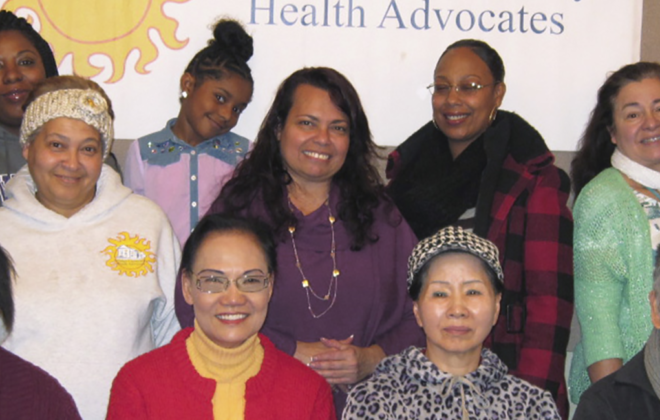
    The Salishan Community Health Advocate (CHA) Program in Tacoma embodies Healthy Gen’s vision for health equity in every way. Salishan residents trained as CHAs create a healthy neighborhood by engaging their neighbors in projects that impact wellness, including planning and maintaining innovative green spaces that are culturally relevant for this largely immigrant community.

    The grant will help CHAs work with their neighbors to build a more vibrant Salishan community for all who live there, but specifically for low-income residents. Salishan’s 16 CHAs are multilingual, multicultural, and multigenerational low-income residents who truly represent their neighborhood. CHAs revitalize Salishan with grassroots advocacy to transform the policies, systems, and environments that affect residents’ wellbeing.